When Do Employees Need Manual Handling Training in Norwich?
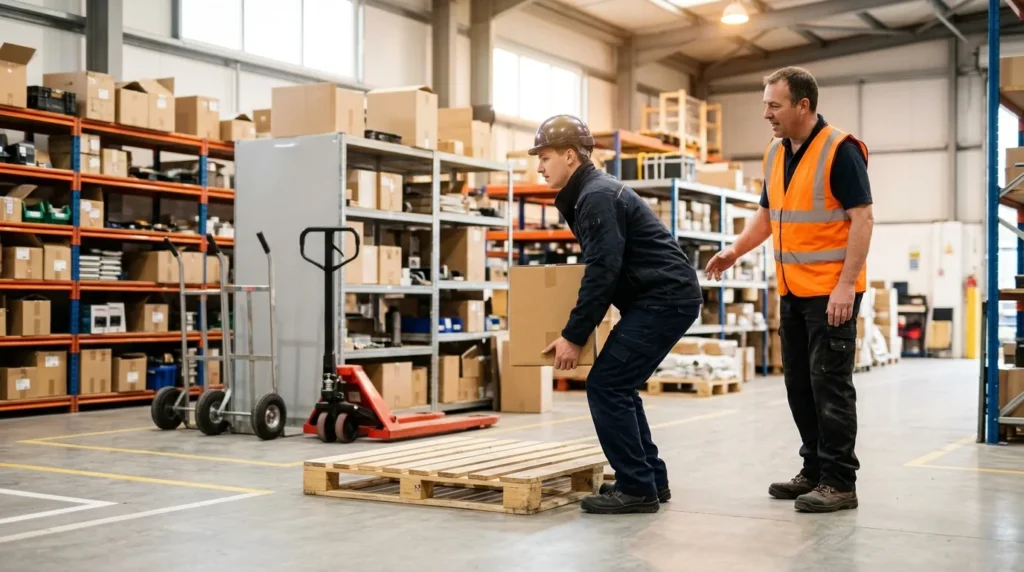
Norwich employees need manual handling training when they start a job involving lifting, carrying, pushing or pulling. They also need it when their work, equipment or loads change, and at sensible intervals after that. The law ties training to risk rather than to a calendar date. Training also comes after you have tried to avoid or reduce the handling, not instead of it.
This guide is for Norwich and Norfolk employers deciding when to book training, who needs it and what has to be in place first.
Key facts
- The Manual Handling Operations Regulations 1992 require employers to avoid hazardous manual handling so far as is reasonably practicable. Where it cannot be avoided, they must assess it and reduce the risk.
- The Management of Health and Safety at Work Regulations 1999 (regulation 13) require training on recruitment and when people are exposed to new or increased risks.
- Training must be repeated periodically where appropriate. The law sets no fixed refresher interval.
- Training should take place during working hours.
- Training supports your risk assessment. It does not replace it.
When do employees need manual handling training in Norwich? The legal triggers
Regulation 13 of the Management Regulations sets out when employers must provide health and safety training. For manual handling, it is required at these points:
- On recruitment. Train new starters before or as they begin handling tasks, not weeks later.
- On a change of responsibilities. Examples include a move from the office to the warehouse, a promotion to supervisor, or covering a different department.
- When new work equipment arrives. Trolleys, hoists, roll cages and vacuum lifters all change how loads are moved.
- When a new system of work comes in. Examples include a new picking layout, a different shift pattern or a new product line with heavier or awkward loads.
- Periodically where appropriate. Skills fade and habits slip, so refresh training on a timescale your risk assessment supports.
Agency workers, temporary staff and seasonal workers are not exempt. Norfolk businesses that take on extra hands for harvest, food production or the Christmas rush need to plan training into the onboarding, because that is when inexperienced people meet the busiest workloads.
Why training comes second, not first
Many employers book manual handling training as their first response to back injuries or a near miss. The regulations set a different order:
- Avoid hazardous manual handling where reasonably practicable. You might bring deliveries closer to where they are used, or change how goods are packed.
- Assess any handling that cannot be avoided. Look at the task, the individual, the load and the environment.
- Reduce the risk with mechanical aids, smaller loads, better layouts or team lifts.
- Train people in the safe system of work you have designed.
Training without that groundwork teaches people to lift better in a workplace that still asks them to lift too much. If you have not yet assessed your handling tasks, start with a small business risk assessment. The training can then refer to your actual tasks and controls.
Who in your business needs it?
The honest answer is anyone whose risk assessment identifies manual handling as part of their work. The obvious roles are warehouse, production, delivery, care, retail stockroom and maintenance staff. Others are easy to miss:
- Office staff who move archive boxes, water bottles or printer paper.
- Cleaners and caretakers moving equipment between floors.
- Hospitality staff handling kegs, crates and linen.
- Managers and supervisors who need to recognise poor technique and unsafe tasks, not just perform lifts themselves.
Regulation 5 of the Manual Handling Regulations also places a duty on employees. They must make full and proper use of any system of work their employer provides. Training is how they learn what that system is.
How often should manual handling training be refreshed?
The law does not set a fixed refresher period for manual handling. It requires training to be repeated periodically where appropriate, so the decision sits with you and should be justified by your risk assessment. Sensible prompts to retrain include:
- An accident, injury or near miss involving handling.
- Observed poor technique or shortcuts becoming normal.
- Changes to loads, equipment, layout or staffing levels.
- A worker returning after a long absence or a musculoskeletal injury.
Keep records of who was trained, when and on what. If HSE or an insurer asks, records show you have thought about refresher timing rather than left it to chance.
Choosing the right format
Practical, task-based training tends to stick better than theory alone, especially when it uses the loads and spaces your staff deal with every day. That is why many employers choose on-site delivery. Others prefer to send staff to a training centre so the session is free from operational interruptions. Some theory elements can be covered through online training. Use it alongside practical instruction for people who physically handle loads, not instead of it.
For details of our course content, delivery options and dates, see our page on manual handling training in Norwich and across Norfolk.
Frequently asked questions
Is manual handling training a legal requirement?
Employers must provide adequate health and safety training, including on recruitment and when risks change. Where staff carry out manual handling, training in your safe system of work is part of meeting that duty. It sits alongside avoiding and reducing hazardous handling.
Does a new starter need training if they were trained by a previous employer?
They still need to understand your tasks, loads, equipment and procedures. Previous training may cover general principles. It cannot cover your workplace.
Is there a maximum weight a worker can lift?
The regulations do not set a legal weight limit. HSE guidance provides filter guidelines to help identify tasks that need a more detailed assessment. The weight is only one factor alongside the task, the individual and the environment.
Does training protect us from liability if someone is injured?
No training course removes an employer’s legal duties or liability. Training is one part of managing the risk, along with assessment, practical controls, supervision and records.
Plan your next step
Milne Safety has supported Norfolk employers since 1978. We can help you assess handling tasks, put sensible controls in place and train your team to follow them. Courses run at our Wymondham training centre, close to Norwich, Attleborough, Dereham and Thetford, or on your own site using your own loads and equipment.
Call us on 01953 607093 or contact our team to discuss what your staff need and when.