First Aid Training for Employers: A Practical Buyer’s Guide
Choosing first aid training starts with your first aid needs assessment, not with a course list. Work out the hazards on your site, how many people you employ, their shift patterns and how far you are from emergency help. That tells you how many trained people you need and what level of training they need. Then book a course that matches.
We have trained Norfolk businesses since 1978 from our base in Wymondham. This guide sets out the questions we would ask before you book anything.
Key facts
- The Health and Safety (First-Aid) Regulations 1981 require employers to provide adequate and appropriate first aid equipment, facilities and people.
- What counts as adequate depends on your first aid needs assessment. There is no single number that fits every workplace.
- Some lower-risk workplaces may only need an appointed person. Higher-risk sites usually need trained first aiders.
- HSE no longer approves first aid training providers, so the employer has to check that a provider is suitable.
- Training needs to be kept up to date. Skills fade, so plan requalification before certificates lapse.
Step 1: Do your first aid needs assessment
Before you look at courses, write down the answers to these questions:
- What hazards are on site? Machinery, forklifts, chemicals, working at height, hot work and sharp tools raise the risk. Office work usually carries less.
- How many people work here, including contractors and visitors?
- Do you run shifts, weekends or lone working? A first aider has to be available whenever people are working, not just on paper.
- Is the site spread out across several buildings or floors?
- How far are you from the nearest A&E, and how long would an ambulance take to reach you? This matters for rural Norfolk sites around Attleborough, Thetford and Dereham.
- Do any staff have known medical conditions, or are there lone workers who travel?
Write the assessment down and keep it with your risk assessments. If something goes wrong, it shows how you reached your decision. Our first aid training page explains how to get in touch if you want help working it through.
Step 2: Decide between first aiders and appointed persons
An appointed person looks after the first aid kit and calls the emergency services. They are not a trained first aider. On a low-risk site that may be enough. Once your assessment shows real hazards or larger numbers, you will usually need trained first aiders, and often more than one so leave, sickness and shifts are covered.
A common mistake is training one person and assuming the job is done. Ask yourself who covers the night shift, the Saturday overtime and the fortnight that person is on holiday.
Step 3: Match the course to the risk
First aid courses vary in length and depth. A short course covers the life-saving basics. A longer course goes further into injuries and illnesses that are more likely in higher-risk work. Your needs assessment should drive the choice, not the shortest option in the diary.
Think about what else your site needs:
- If you have a defibrillator on site, or plan to install one, staff need to know how to use it confidently. We run a dedicated automated external defibrillator course.
- If your work involves particular risks such as chemicals, burns or work at height, raise it when booking so the training covers what your people are most likely to face.
Step 4: Check the provider before you book
Because HSE no longer approves first aid training providers, the due diligence sits with you. Ask any provider:
- What qualifications and experience do your trainers have in both first aid and teaching?
- How is the course assessed, and what happens if a delegate does not meet the standard?
- What certificate does each delegate receive, and how long is it valid? Check the course page or ask directly.
- Is the content in line with current guidance?
- Can you train on our site, using our layout and equipment?
A good provider will answer all of these without hesitation. If you get vague answers, look elsewhere.
Step 5: Choose where the training happens
We deliver courses at our training centre in Wymondham or on your own premises. Each has advantages:
- Our training centre suits smaller numbers. Delegates are away from the day job and can concentrate.
- On-site training suits larger groups and cuts travel. Your people practise in the place where they would actually respond, and the trainer can point out site-specific issues such as where the kit is kept or how an ambulance would get in.
Step 6: Plan requalification now
Book the refresher at the same time as the first course, or at least put the date in the diary. First aid skills fade quickly when they are not used. A lapsed certificate can leave you short of cover without anyone noticing. Our First Aid at Work requalification course is there for first aiders who need to renew.
Frequently asked questions
How many first aiders does my business need?
There is no fixed figure in law. The number comes from your first aid needs assessment, based on your hazards, headcount, shift patterns, site layout and distance from emergency services. HSE publishes guidance to help employers decide.
Do we need first aid cover for the public?
The regulations cover your employees. HSE strongly recommends that organisations dealing with the public, such as shops, venues and schools, include them in the assessment.
Can first aid training be done entirely online?
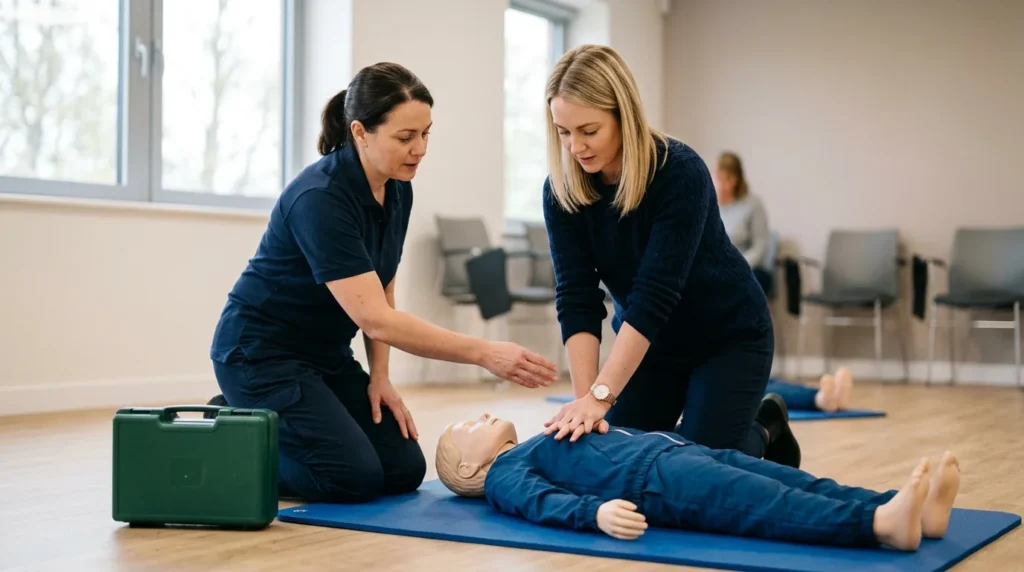
First aid involves practical skills such as CPR and putting someone into the recovery position. These need hands-on practice and assessment. Talk to us about which format suits the qualification you need.
Does training staff mean we are compliant?
Training is one part of meeting your duties. You also need the right number of first aiders available at all times, suitable kit and facilities, and a written needs assessment that you review when things change. No course on its own guarantees compliance.
Book first aid training in Norfolk
Milne Safety has supported employers across Wymondham, Norwich, Attleborough, Thetford and Dereham since 1978. Our 52 Google reviews average 5.0. We can help you work through your first aid needs assessment and then train your people at our Wymondham training centre or on your own site.
Call us on 01953 607093 to discuss your requirements, check dates or arrange on-site training for your team.