Crane Training: Overhead Gantry, Slinger & Signaller Guide
Crane training (overhead gantry, slinger and signaller) covers everyone who operates an overhead gantry crane, slings the load and signals the lift, and under LOLER 1998 and PUWER 1998 all three need to be trained and competent. A dropped or swinging load can kill, and the employer who cannot show competent, documented training is the one the HSE looks at first. Here we explain what overhead gantry, slinger and signaller training should cover, and how to pick the right course for your site.
Key facts at a glance
- Overhead crane, slinger and signaller duties are separate roles – a single operator often needs more than one of them.
- LOLER 1998 and PUWER 1998 require operators to be trained and competent for the equipment and the lifting operation.
- Lifting operations must be planned, supervised and carried out safely by competent people.
- Training should be refreshed when equipment, duties or working practices change.
- We deliver crane training at our Wymondham training centre or on your own site, across Norwich, Attleborough, Thetford and Dereham.
Why crane training (overhead gantry, slinger and signaller) matters
An overhead gantry crane moves heavy loads above head height, across a working area where people are present. The risks are obvious once something goes wrong: a load that swings, slips from a poorly rigged sling, or is lowered onto someone below. These are the lifts that cause life-changing crush injuries and fatalities.
The law is clear about who should be doing the work. Under the Lifting Operations and Lifting Equipment Regulations 1998 (LOLER), lifting operations must be properly planned by a competent person, appropriately supervised and carried out safely. Under the Provision and Use of Work Equipment Regulations 1998 (PUWER), anyone using work equipment must have received adequate training. For overhead cranes, that means training is not optional – it is how you demonstrate competence if an inspector asks.
Three roles, three sets of skills
People often assume “crane training” is one thing. In practice a safe lift usually involves three distinct roles, and the same person may hold more than one.
- Overhead gantry crane operator – controls the crane, understands its controls, limits, safe working load and pre-use checks, and operates it smoothly without snatching or swinging the load.
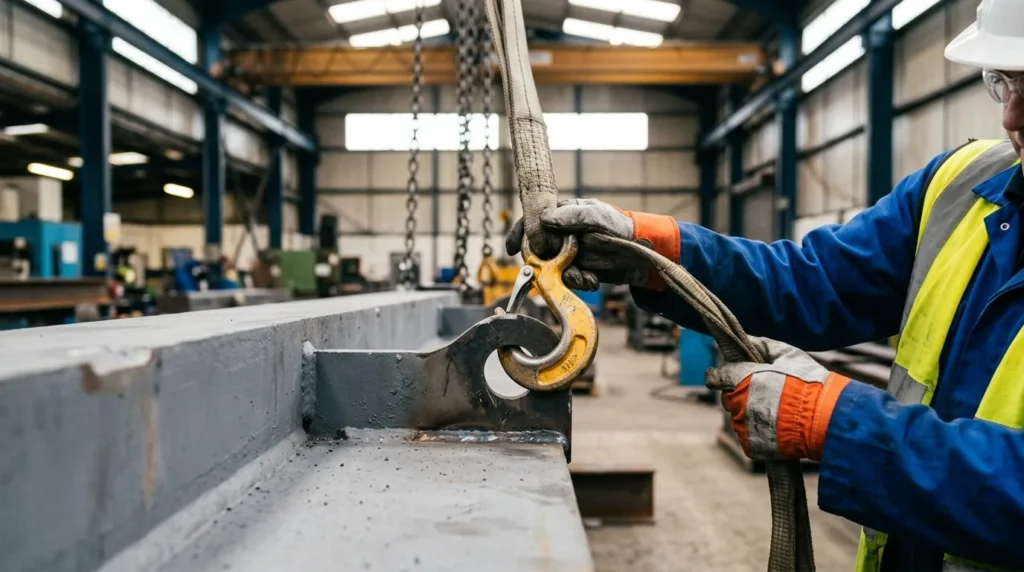
- Slinger – selects and attaches the correct lifting accessories (slings, chains, shackles, eyebolts), inspects them before use, and rigs the load so it lifts level and secure.
- Signaller / banksman – directs the lift using clear, standard hand signals or radio, keeps people clear of the load, and is the one set of eyes guiding the operator when the view is restricted.
On a small site one trained person may do all three. On a larger lift they are separate people who must work to an agreed signalling system. Training covers whichever combination your operation needs.
What good crane training should cover
A proper course is practical, not just a classroom talk. For overhead gantry, slinger and signaller training we would expect it to include:
- The relevant law and the employer’s and operator’s duties under LOLER and PUWER.
- Pre-use inspection of the crane and the lifting accessories, and what to do when something is damaged or out of date.
- Safe working loads, load weights and how to assess them, and the effect of the sling angle on the load on each leg.
- Selecting and rigging the correct lifting accessories for the load.
- Standard hand signals and safe communication between slinger, signaller and operator.
- Planning the lift, controlling the area and keeping people clear of suspended loads.
- Practical operation and assessment on equipment representative of your site.
We tailor the content to your cranes and your lifting operations, so delegates train on the kind of equipment and loads they will actually handle. You can see our range of practical lifting and plant courses on our crane training and risk training pages.
Choosing the right course for your site
Start from the roles, not the course title. Ask who operates the crane, who rigs the loads and who directs the lift – then make sure each person is trained for what they actually do. A new starter needs the full course; an experienced operator moving to different equipment needs training on that equipment. Refresher training keeps skills current when your plant, your loads or your working practices change.
Delivery is flexible. We run courses at our own training centre in Wymondham, or we come to your premises so your team trains on your own crane in your own working environment – often the most realistic and least disruptive option for employers in Norwich, Attleborough, Thetford and Dereham.
Training is only part of the picture
Competent people still need a safe system of work around them. A lifting operation should sit within a current risk assessment and a lift plan, with lifting equipment thoroughly examined and records kept. If you are not sure your lifting operations are properly documented, our health and safety consultancy team can review your risk assessments and procedures alongside the training.
Frequently asked questions
Do crane operators need a licence?
There is no single legal “licence” for overhead crane work in the way there is for driving on the road. The legal requirement is competence: under PUWER and LOLER the employer must ensure operators, slingers and signallers are adequately trained and competent for the equipment and the lift. A training certificate is the usual way to evidence that.
Can one person be operator, slinger and signaller?
Yes, on simple lifts a single trained person may carry out more than one role, provided they are competent in each and can do so safely. More complex lifts are planned so these are separate people communicating to an agreed signalling system.
How often should crane training be refreshed?
Refresher training should keep competence current – typically when someone changes equipment or role, when working practices change, or when assessment shows skills have slipped. We will advise on a sensible interval for your operation; we do not quote a fixed validity period that is not stated on the course.
Do you train at our site or at yours?
Both. Courses run at our Wymondham training centre, or we deliver on your site so delegates train on the crane and loads they use day to day.
Book your crane training
Established in 1978, we are a Norfolk health and safety consultancy and training provider based in Wymondham, delivering practical crane, slinger and signaller training at our training centre or on your site. To arrange training or talk through what your lifting operations need, call us on 01953 607093 or contact our team for a quote.